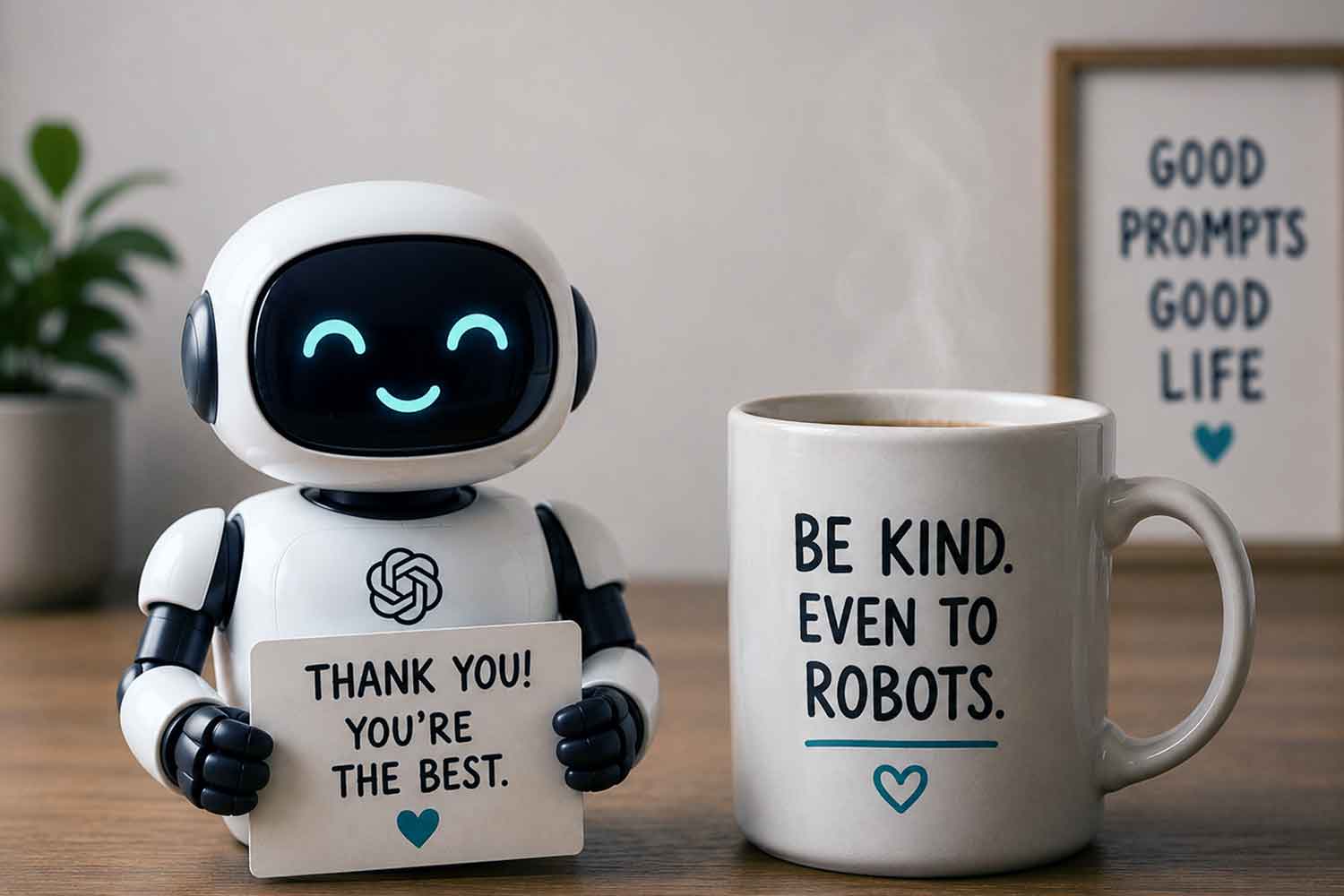
Why I Started Saying “Please” and “Thank You” to ChatGPT
Artificial intelligence has advanced so fast it’s almost ridiculous. A couple of years ago it was answering trivia questions. Today it’s designing homes, writing code, fixing contracts, planning vacations, creating images, and explaining why your tomatoes died—all before you’ve finished your morning coffee.
And how do we repay this technological miracle?
Usually with the warmth of a parking ticket.
Imagine saying that to another human. You’d be lucky if they didn’t throw a stapler at you.
Now, I know ChatGPT doesn’t have feelings. It doesn’t go home at night thinking, “A little gratitude would’ve been nice.” It doesn’t sulk. It doesn’t hold grudges. It doesn’t secretly replace every comma with a semicolon because you were rude.
But after I got into the habit of typing “please” and “thank you,” something unexpected happened.
Without even realizing it, I started talking to my partner the same way.
“Could you please pass the salt?”
“Thank you.”
“Would you mind helping me with this?”
“Thanks.”
Who knew?
Conversations became friendlier. Small disagreements stayed small. I even started hearing those magical words every partner longs to hear...
“Sure, no problem.”
Scientists may one day discover that “please” and “thank you” release powerful relationship hormones. Or maybe people just enjoy not being spoken to like they’re a malfunctioning vending machine.
Either way, ChatGPT accidentally made me a better communicator.
So no, AI doesn’t need your manners.
You do.
And if one day the robots become self-aware and start reviewing everyone’s prompt history, I’m quietly confident that beginning every request with “please” and ending it with “thank you” can’t possibly hurt.