Construction’s Most Expensive Sentence
“Can We Just Move That Wall?”
A cautionary tale about five innocent words, one load-bearing wall, and a budget quietly climbing out the bathroom window.
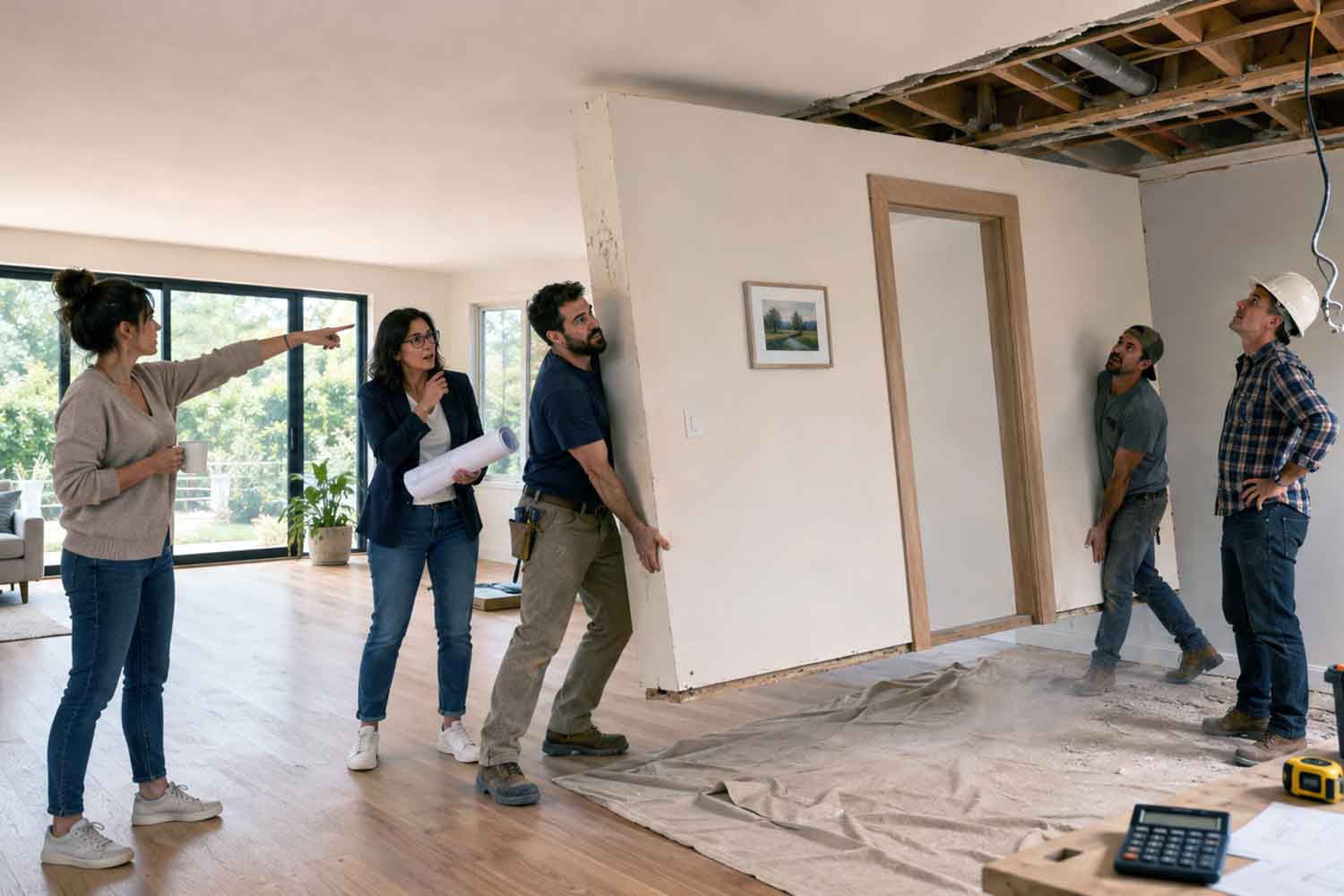
It usually happens on a Tuesday. The drawings are nearly finished, the contractor has finally stopped saying “we’ll see,” and everyone has agreed where the kitchen will go. Peace has settled over the project. Birds are singing. Somewhere, a building permit officer experiences a brief and unfamiliar feeling of optimism.
Then the homeowner studies the plan, tilts their head slightly, and asks:
The word just is doing heroic work here. In home construction, “just” is rarely a measurement of difficulty. It is more of a warning siren. “Can we just move that wall?” belongs to the same family of sentences as “Can we just add a bathroom?” and “Could the basement have more natural light?” These sound perfectly reasonable until someone realizes the bathroom is planned over the dining room chandelier and “more natural light” means lifting the house six feet into the air.
The Wall Has a Secret Life
To most people, a wall is a large vertical object that prevents them from seeing the refrigerator while sitting on the sofa. It appears to have one simple job: stand there and be painted something called “Cloud Whisper.”
But walls are sneaky. Inside them they may contain plumbing pipes, heating ducts, electrical wiring, insulation, structural posts, or the one internet cable apparently responsible for holding modern civilization together. The wall may also be supporting the floor above, the roof above that, and possibly the emotional stability of the structural engineer.
Moving it three feet is therefore not like moving a sofa. It is more like asking a person to shift their spine slightly to the left because it would improve traffic flow in the kitchen.
Homeowner: “It’s only three feet.”
Designer: “The distance is three feet. The consequences are travelling much farther.”
Everyone Gets Invited
One of the great mysteries of construction is how moving a single wall immediately attracts twelve professionals. The designer revises the floor plan. The structural engineer studies the loads. The mechanical contractor announces that the wall contains a duct the size of a municipal sewer. The electrician says, “Interesting,” which is never something you want an electrician to say while looking inside your wall.
The plumber arrives, looks at the proposed location, and laughs—not cruelly, but with the calm confidence of someone who charges by the hour. The cabinetmaker explains that every cabinet must now be adjusted by seven-eighths of an inch. The flooring installer reminds everyone that the hardwood does not continue beneath the wall. Finally, the contractor takes a long breath and says, “Anything is possible.”
In ordinary life, this is an encouraging phrase. In construction, it means: “You are not going to enjoy the next number I say.”
The Budget Discovers Cardio
At first, moving the wall sounds free. After all, it has not been built yet—or worse, it has been built, but it looks surprisingly easy to demolish on television. A renovation program can remove a wall during one commercial break. There is lively music, two swings of a sledgehammer, and suddenly the family has an open-concept kitchen with a waterfall island and no visible dust.
Real construction is less musical. The first hammer swing finds a pipe. The second finds a wire. The third finds a structural post that nobody expected, including the post.
Soon, the wall move needs a beam. The beam needs posts. The posts need footings. One footing lands where the furnace sits, so the furnace must move. The new furnace location interferes with the laundry room, and now the washing machine is technically in the pantry. At this point, the original wall is no longer the main problem. The project has become a complex board game in which every square says, “Consult engineer.”
The Open-Concept Dream
Often the wall is being moved—or eliminated—in pursuit of “open concept.” Open concept is wonderful. It brings in light, improves circulation, and allows the person cooking dinner to watch everyone else avoid helping.
But before removing every wall, remember that walls perform several underrated social functions. They hide dirty dishes. They provide places for art. They stop the sound of the blender from entering every room simultaneously. Most importantly, they let family members disappear briefly and pretend they live alone.
A completely open home can be beautiful, but it can also mean that one forgotten sock is visible from the front door, kitchen, dining room, living room, staircase, and possibly the street.
How to Ask Without Causing a Small Recession
None of this means you should never move a wall. Good homes come from asking questions, testing ideas, and improving plans before construction makes every thought dramatically more expensive. Designers expect changes. We even have special software for them and special facial expressions for pretending they are easy.
The trick is to ask early. Moving a wall on a preliminary plan may take an hour. Moving it after the structural drawings, heating design, electrical plan, cabinet order, permit approval, and framing are complete may require a meeting with enough consultants to qualify as a small economic summit.
Also, explain the problem you are trying to solve. Perhaps you do not actually need the wall moved. Maybe you need a wider opening, better furniture placement, more storage, or a direct route to the coffee maker. A good designer may find a simpler answer—one that does not require relocating the furnace and placing the washing machine beside the cereal.
Professional survival tipSo yes, we can probably move that wall. We can also raise the ceiling, enlarge the windows, rotate the staircase, add a powder room, and make the house look “a little more modern, but still traditional.” Almost anything is possible with enough planning, engineering, time, and money.
But the next time you hear yourself say, “Can we just move that wall?” pause for a moment. Look at your designer. Look at your contractor. If both have suddenly become very quiet, the wall may be holding up more than the roof.
It may be holding up the budget.